Archive

News

Sunday, August 16th, 2026

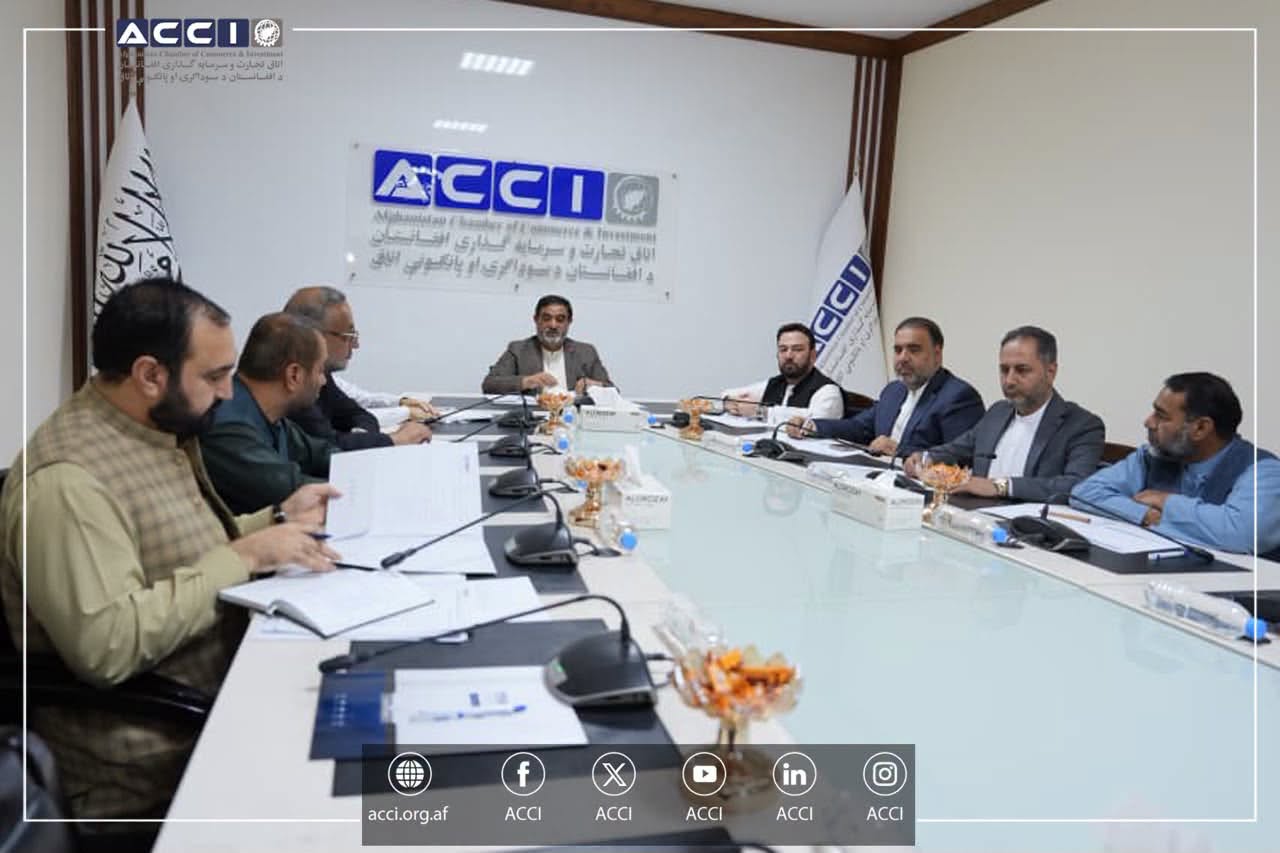
The 12th Extraordinary Meeting of the Executive Committee of the Afghanistan Chamber of Commerce and Investment (ACCI) was held under the chairmanship of Mr. Sayed Karim Hashemi, Chairman of ACCI, with the participation of Mr. Mohammad Ibrahim Moheb, Deputy for International Relations; Mr. Faiz Ahmad Khawafi, Deputy for Provincial Affairs; Mr. Arian Zalgai Azimi, Deputy for Investment; Mr. Mirajan Sulaimankhel, Deputy for Policy and Government Relations; Mr. Gulbahar Habibi, Deputy for Commerce; and other ACCI officials.

The first agenda item focused on a comprehensive discussion on the effective organization of the Fifth Imam Abu Hanifa (RH) National and International Exhibition. Necessary decisions were made regarding the preparatory arrangements and required coordination for the successful organization of the exhibition.

Mr. Sayed Karim Hashemi also appreciated the efforts and active participation of the Board of Directors’ deputies, the Head of the Board Secretariat, and the Acting Head of the Executive Board in the meetings held over the past month. He emphasized the importance of unity, coordination, and joint efforts in supporting the private sector and strengthening economic activities in the country.

Sunday, August 16th, 2026

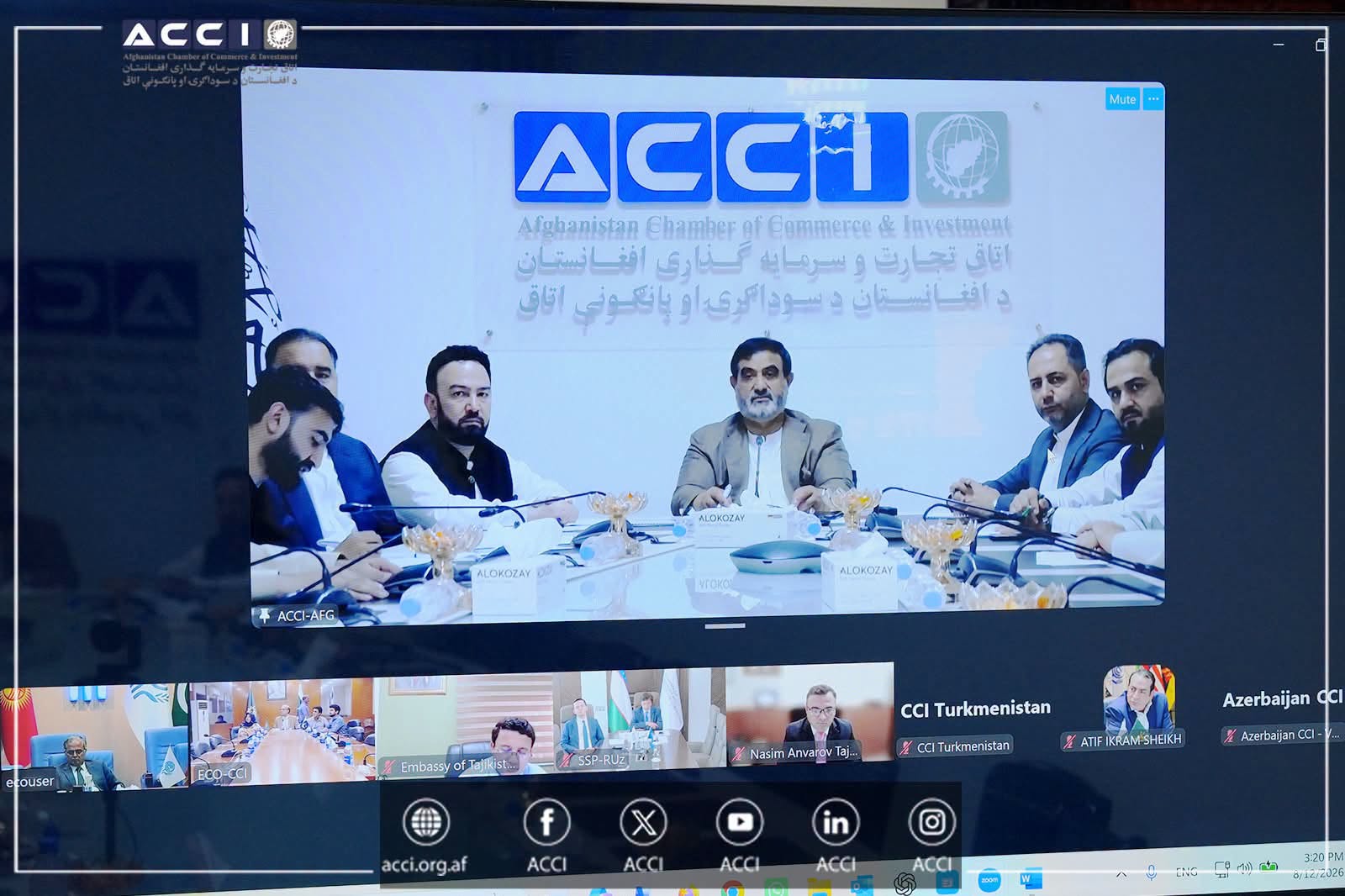
An online meeting of the Economic Cooperation Organization (ECO), aimed at strengthening and expanding regional economic, trade, and transit cooperation, was held with the participation of the heads and representatives of the Chambers of Commerce and Industries of ECO member states.

The meeting opened with introductory remarks by Mr. Atif Ikram Sheikh, Chairman of the Chambers of Commerce and Industries of ECO member states. Subsequently, the heads and representatives of the member chambers discussed ways to expand trade, investment, transit, and regional economic cooperation.

Mr. Sayed Karim Hashemi, Chairman of the Afghanistan Chamber of Commerce and Investment (ACCI), speaking on behalf of Afghanistan’s private sector and business community, described the ECO region as possessing significant economic potential, a strategic geographic location, considerable natural resources, broad markets, and a young and dynamic workforce. He emphasized that the economic future of the region is more than ever dependent on regional cooperation, connectivity, and mutual trust.

Mr. Hashemi stated that, given the rapid transformation of the global economy, changes in supply chains, the growing importance of transit routes, food and energy security, the development of the digital economy, and the need to access new markets, regional cooperation is no longer merely an option but has become an economic necessity.

The Chairman of ACCI emphasized that ECO has the potential to increasingly develop into an effective regional platform for trade, transit, investment, and joint production, with the private sectors of member states playing a fundamental and decisive role in this process.

He described the Chambers of Commerce of ECO member states as effective bridges between governments and the private sector and called for ECO’s economic objectives and decisions to move beyond dialogue toward practical, implementable, and results-oriented programs.

Afghanistan: A Bridge for Regional Economic Connectivity
Mr. Sayed Karim Hashemi, referring to Afghanistan’s geographic position at the crossroads of Central Asia, South Asia, and West Asia, stated that this position should be transformed from a potential geographic capacity into a practical economic and transit advantage for the entire region.

He emphasized that Afghanistan is ready to play a constructive role as a trade and transit bridge among regional countries. The development of transit corridors, facilitation of regional trade, connectivity of transportation and energy networks, and establishment of reliable routes for the movement of goods can bring significant economic benefits not only to Afghanistan but to all ECO member states.

The Chairman of ACCI added that Afghanistan wants regional countries to gain access to new markets through Afghanistan, while the country itself should become an active part of regional value chains and economic cooperation, beyond merely serving as a transit route.

Afghanistan’s Proposals for Expanding Economic Cooperation:
In his remarks, the Chairman of ACCI presented several practical areas for strengthening cooperation among ECO member states.

He emphasized the facilitation of regional trade and transit, reduction of unnecessary barriers, simplification of customs procedures, greater regulatory coordination, and wider use of digital systems.
Strengthening direct connections among the private sectors of member states through regular B2B meetings, joint exhibitions, exchanges of business delegations, and the establishment of an effective mechanism for sharing investment opportunities were also among the proposals presented.

Mr. Hashemi further called for promoting joint regional investments in agriculture and agro-processing, mining, energy, transportation and logistics, textiles, industrial production, technology, and the digital economy.

He also emphasized strengthening the role of small and medium-sized enterprises and creating opportunities for greater participation of business communities in regional trade.

Another proposal by the Chairman of ACCI was the establishment of a systematic mechanism to identify and address trade barriers among member states, allowing Chambers of Commerce to collect the actual challenges faced by traders and present them, together with specific solutions, to governments and relevant institutions.

The Chairman of ACCI also emphasized that ECO’s meetings and specialized committees should become increasingly results-oriented, with clear objectives, timelines, and follow-up mechanisms established for decisions taken.

He noted that the success of regional economic cooperation should not be measured solely by the number of meetings held; rather, actual growth in trade, investment, regional connectivity, and cooperation among member states should serve as the primary measures of success.

Emphasis on Increasing Intra-Regional Trade:
Mr. Sayed Karim Hashemi identified increased intra-regional trade among ECO member states as an important priority and expressed the readiness of Afghanistan’s private sector to expand trade, investment, transit, and joint-production cooperation with all member states.

He emphasized that the economic prosperity of any country in the region cannot be defined separately from the economic prosperity of its neighbors. If the trade routes of member states become interconnected, barriers to the movement of goods and capital are reduced, and investor confidence is strengthened, ECO countries will be able to build a stronger and more competitive economic region.

Emphasizing the need to move from geographic proximity toward economic integration, the Chairman of ACCI called for a shift from limited bilateral trade toward regional value chains and from general dialogue toward tangible economic projects and results.

Emphasis on Resuming In-Person Meetings:
During the meeting, Mr. Atif Ikram Sheikh emphasized the important role of regional economic cooperation and identified the political and military conflicts in the region as among the factors that had reduced regular in-person meetings in recent years.

He stressed the need to resume face-to-face meetings and direct interactions among members and encouraged the organization’s members, in coordination with their respective governments, to facilitate travel, expand B2B meetings among traders and investors, develop and coordinate transportation and logistics networks, and regularly organize meetings among the leadership of chambers and economic institutions of member states.

Afghanistan Ready to Host the Next ECO Meeting:
At the conclusion of the meeting, the issue of selecting the host for the next in-person meeting was discussed.

Mr. Sayed Karim Hashemi, Chairman of the Afghanistan Chamber of Commerce and Investment, on behalf of Afghanistan’s private sector, invited the heads and leadership of the Chambers of Commerce of ECO member states and announced Afghanistan’s and ACCI’s readiness to host the next in-person meeting in Kabul.

The proposal was welcomed by the participants, while Afghanistan’s readiness to host the upcoming meeting was also welcomed by the organization’s leadership and representatives of several member states.
The meeting was also attended by Mr. Mirajan Sulaimankhel, Deputy for Policy and Government Relations; Mr. Arian Zalgai Azimi, Deputy for Investment; and Mr. Faiz Ahmad Khawafi, Deputy for Provincial Affairs of the Afghanistan Chamber of Commerce and Investment.

The next meeting of the Economic Cooperation Organization (ECO) is scheduled to be held in November of this year.

Holding the meeting in Kabul could provide an important opportunity for the direct participation and interaction of the leadership of chambers from member states, the presentation of Afghanistan’s economic capacities and investment opportunities, and practical discussions on trade, transit, investment, regional connectivity, and the expansion of direct relations among the private sectors of member states.

The Afghanistan Chamber of Commerce and Investment considers hosting this meeting an important step toward strengthening Afghanistan’s economic position in the region, introducing the country as an economic and transit connectivity bridge, and expanding trade and investment relations with ECO member states.

Wednesday, August 12, 2026

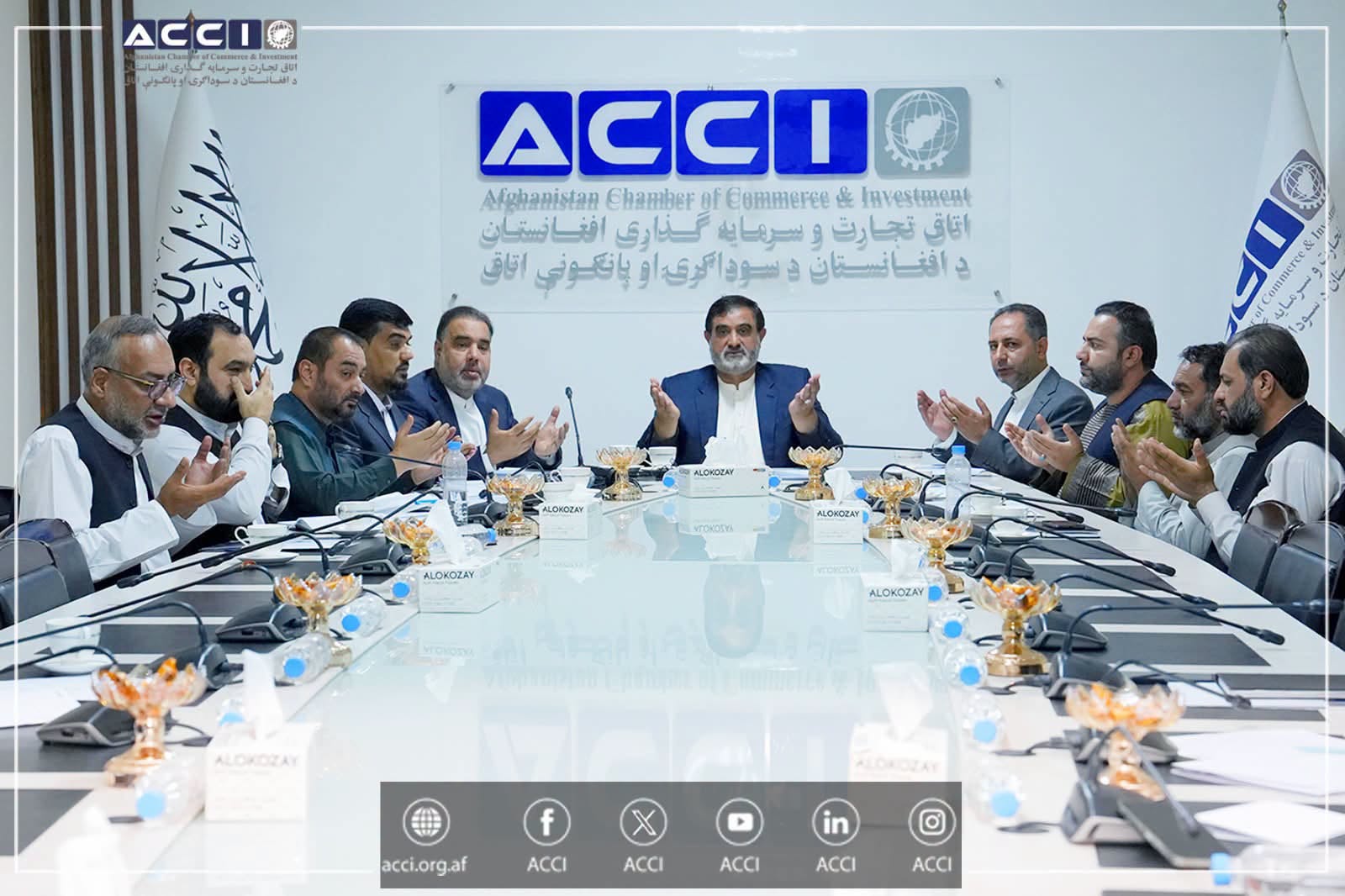
The 11th Extraordinary Meeting of the Executive Committee of the Afghanistan Chamber of Commerce and Investment (ACCI) was held at the main office, chaired by Mr. Sayed Karim Hashemi, Chairman of ACCI. The meeting focused on strengthening internal management, enhancing coordination and cohesion among the Chamber’s leadership bodies, improving and expanding services to the private sector, and reviewing preparations for participation in the August 15 ceremony marking the Victory Day of the Islamic Emirate of Afghanistan.

The meeting was attended by Mr. Mirajan Sulaimankhel, Deputy for Policy and Government Relations; Mr. Gulbahar Habibi, Deputy for Commercial Affairs; Mr. Faiz Ahmad Khawafi, Deputy for Provincial Affairs; Mr. Abdul Nafi Barakzai, Deputy for Support to Domestic Production and Products; Mr. Enayatullah Sediqzai, Deputy for Services; Mr. Mujib-ur-Rahman Shirzad, Deputy for Strategic Affairs; and Mr. Zabihullah Omarkhil, Secretary General of the ACCI Board of Directors.

At the beginning of the meeting, Mr. Sayed Karim Hashemi, Chairman of ACCI, spoke on eight key areas related to the Chamber’s internal, managerial, and operational affairs. Key issues included strengthening institutional capacity, reforming and improving internal affairs, reviewing the responsibilities and division of duties within the Board of Directors, strengthening coordination among the Leadership Council, Executive Committee, Board of Directors, and Executive Directorate, reviewing operational and administrative decisions, ensuring ACCI’s effective participation in the August 15 Victory Day ceremony, improving administrative and technical services to the private sector, and safeguarding the Chamber’s institutional standing, credibility, and reputation against any conduct or action contrary to its principles and interests.

In his remarks, the Chairman stated, “Our responsibility is not limited to carrying out day-to-day affairs. Rather, we have a duty to create an environment for the growth of trade, investment, production, employment, and healthy and sustainable private-sector activity through sound management, timely decision-making, effective coordination, and systematic planning.”

Referring to the comprehensive preparations by ACCI and the private sector for the August 15 Victory Day ceremony, Mr. Hashemi noted that AFN 450,000 had been allocated by the Chairman and deputies of the Chamber from their personal funds to cover part of the expenses and requirements related to the preparation and organization of the ceremony.

He also emphasized the need for detailed event planning, proper coordination with relevant authorities, invitation of guests, active participation of private-sector representatives, well-organized programming, appropriate media coverage, preparation of messages, and completion of other necessary arrangements.
Following this, Mr. Zabihullah Omarkhil, Secretary General of the ACCI Board of Directors, presented the agenda items of the 11th Extraordinary Meeting of the Executive Committee to the participants.

Mr. Faiz Ahmad Khawafi, ACCI Deputy for Provincial Affairs, then presented a report on the revenues and expenditures of the provincial chambers. Mr. Zainullah Hasany, Deputy for Finance and Administration and Acting CEO of the ACCI Executive Directorate, also presented a report on the activities and performance of the Executive Directorate.

In the final part of the meeting, members of the Executive Committee held comprehensive discussions on the active participation of the Board of Directors in advancing the Chamber’s activities, the organization and implementation of the August 15 Victory Day ceremony, the organizational structure and staffing levels, revenues and expenditures of provincial offices, proposals from the Executive Directorate, and other important administrative and operational matters.

Following a comprehensive review of the issues discussed, the necessary decisions were adopted to strengthen internal coordination, improve the quality and effectiveness of services, enhance administrative procedures, and ensure more effective implementation of the programs and activities of the Afghanistan Chamber of Commerce and Investment.

Friday, August 14th, 2026

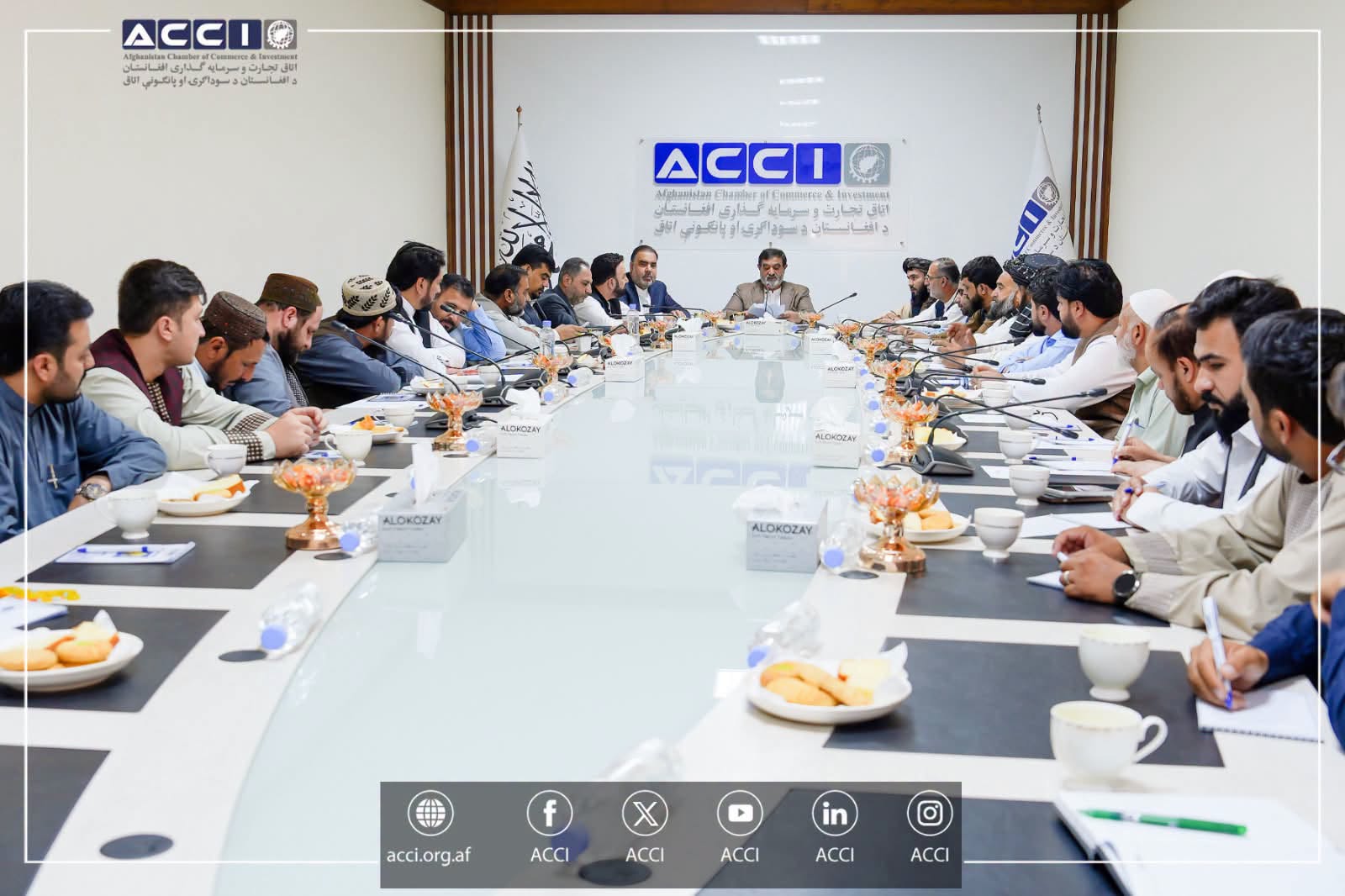
The inaugural meeting of the Specialized Export Committee of the Afghanistan Chamber of Commerce and Investment (ACCI) was held under the chairmanship of Mr. Sayed Karim Hashemi, Chairman of ACCI, with the participation of Chamber leadership, as well as a number of traders and exporters, at the ACCI main office.

In his opening remarks, Mr. Sayed Karim Hashemi described exports as one of the fundamental pillars of economic growth and strengthening the national economy. He stated that expanding Afghanistan’s exports can contribute to increased production, job creation, investment attraction, higher revenues, and the overall strengthening of the country’s economy.

Referring to Afghanistan’s vast potential in agricultural products, fresh and dried fruits, saffron, carpets, handicrafts, medicinal plants, precious and semi-precious stones, and other domestic products, he emphasized that these potentials can be transformed into sustainable economic value when Afghan products are exported to regional and international markets with appropriate quality, standardized packaging, competitive prices, and through reliable trade routes.

The ACCI Chairman also emphasized the need to preserve traditional markets while simultaneously identifying new markets. He identified Central Asia, South Asia, the Gulf countries, China, Turkey, and other regional and global markets as important opportunities for expanding Afghanistan’s exports.
Mr. Hashemi, referring to the existing challenges facing the country’s exports—including transit challenges, high transportation costs, customs-related issues, banking restrictions, quality and packaging standards, and limited market information—stressed the need for serious and practical measures to address these challenges.

He emphasized that the Specialized Export Committee should not become merely a ceremonial structure or a platform for holding meetings. Rather, it should serve as the genuine voice of Afghan exporters, identify and prioritize their challenges, develop practical solutions, and follow up on issues until tangible results are achieved.

He assured that any practical proposal that contributes to increasing exports, reducing trade costs, removing barriers facing exporters, and accessing new markets would receive the support of the Chamber’s leadership.

The meeting was attended by Mr. Enayatullah Sediqzai, Deputy for Services; Mr. Mirajan Solaimankhail, Deputy for Policy and Government Relations; Mr. Arian Zalgai Azimi, Deputy for Investment; Mr. Faiz Ahmad Khawafi, Deputy for Provincial Affairs; and Board Members Mr. Zabihullah Samim, Mr. Abdullah Rahimi, Mr. Sakhi Ahmad Noorzad, Mr. Gulmir Amini, and Mr. Yahya Pashtun.

In continuation, Mr. Yahya Pashtun, Chairman of the Specialized Export Committee of ACCI, described the establishment of the committee as an important step toward economic development and supporting the country’s exports.

Expressing his appreciation for the confidence placed in him by the Chamber’s leadership, he said he considers the responsibility a major commitment and will work together with committee members to take practical measures to address exporters’ challenges, increase the value added of Afghan products, expand exports, and identify new international markets.

Tuesday, August 11, 2026

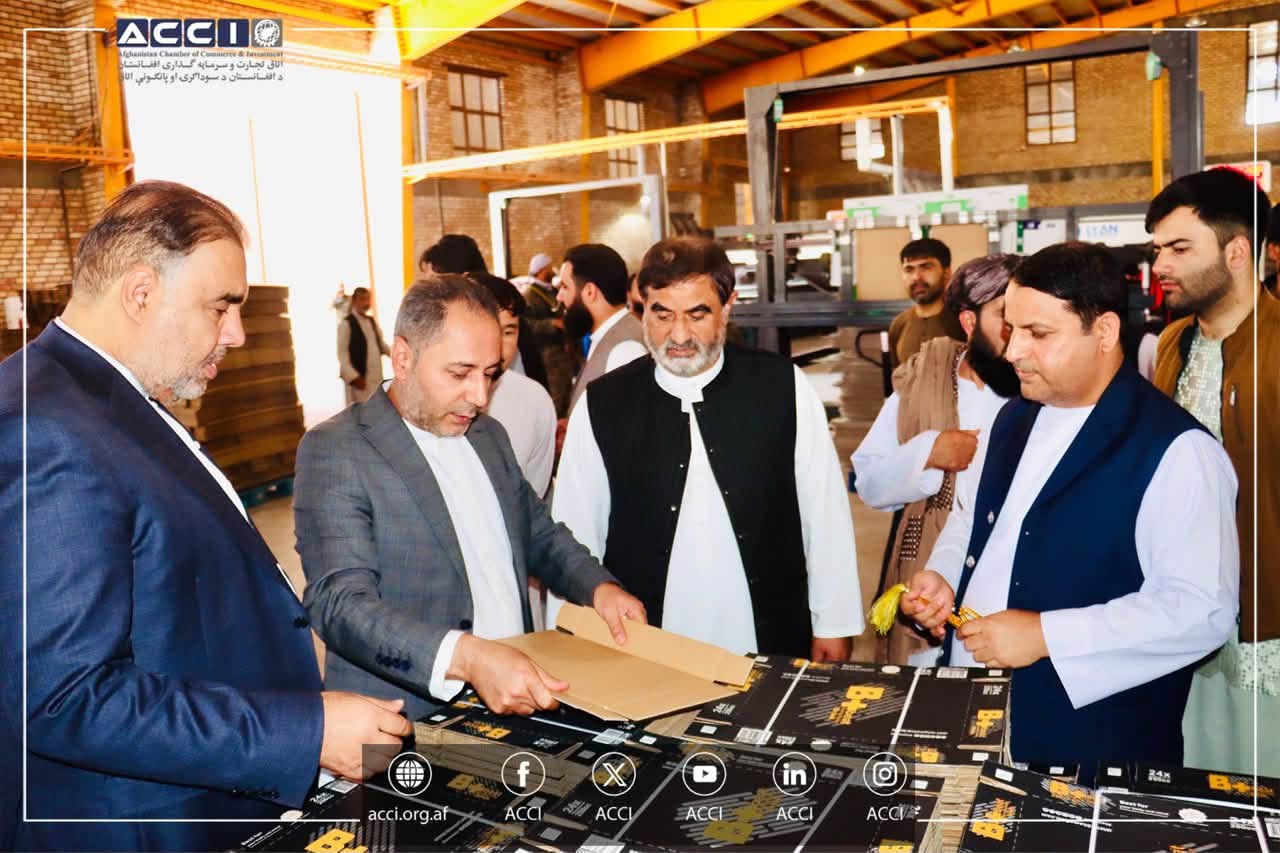
Mr. Sayed Karim Hashemi, Chairman of the Afghanistan Chamber of Commerce and Investment (ACCI), during his working visit to Herat Province, accompanied by Mr. Faiz Ahmad Khawafi, ACCI Deputy for Provincial Affairs, and Mr. Mirajan Sulaimankhel, ACCI Deputy for Policy and Government Relations, visited the carton production factory of Al-Madina Ansari Company.

The visit was aimed at supporting domestic investment, strengthening the private sector, assessing production capacity, and gaining a better understanding of the factory’s industrial capabilities.

During the visit, officials of Al-Madina Ansari Company stated that the factory is one of the largest and most well-equipped carton production facilities in the region. They noted that the facility operates using modern, standardized machinery and under the technical supervision of foreign engineers.

According to company officials, the factory has a nominal production capacity of 500,000 square meters of carton per day. Its required raw materials are sourced from Iran and Russia, while Chinese and Iranian engineers are engaged in the factory’s technical and specialized operations.

The Chairman of ACCI and his delegation expressed their appreciation for the industrial activities of Al-Madina Ansari Company and its contribution to the development of Afghanistan’s packaging industry. They emphasized the importance of supporting investors, strengthening domestic production, increasing value addition, reducing dependence on imports, and creating greater opportunities for the growth and development of the private sector.

Thursday, August 13th, 2026

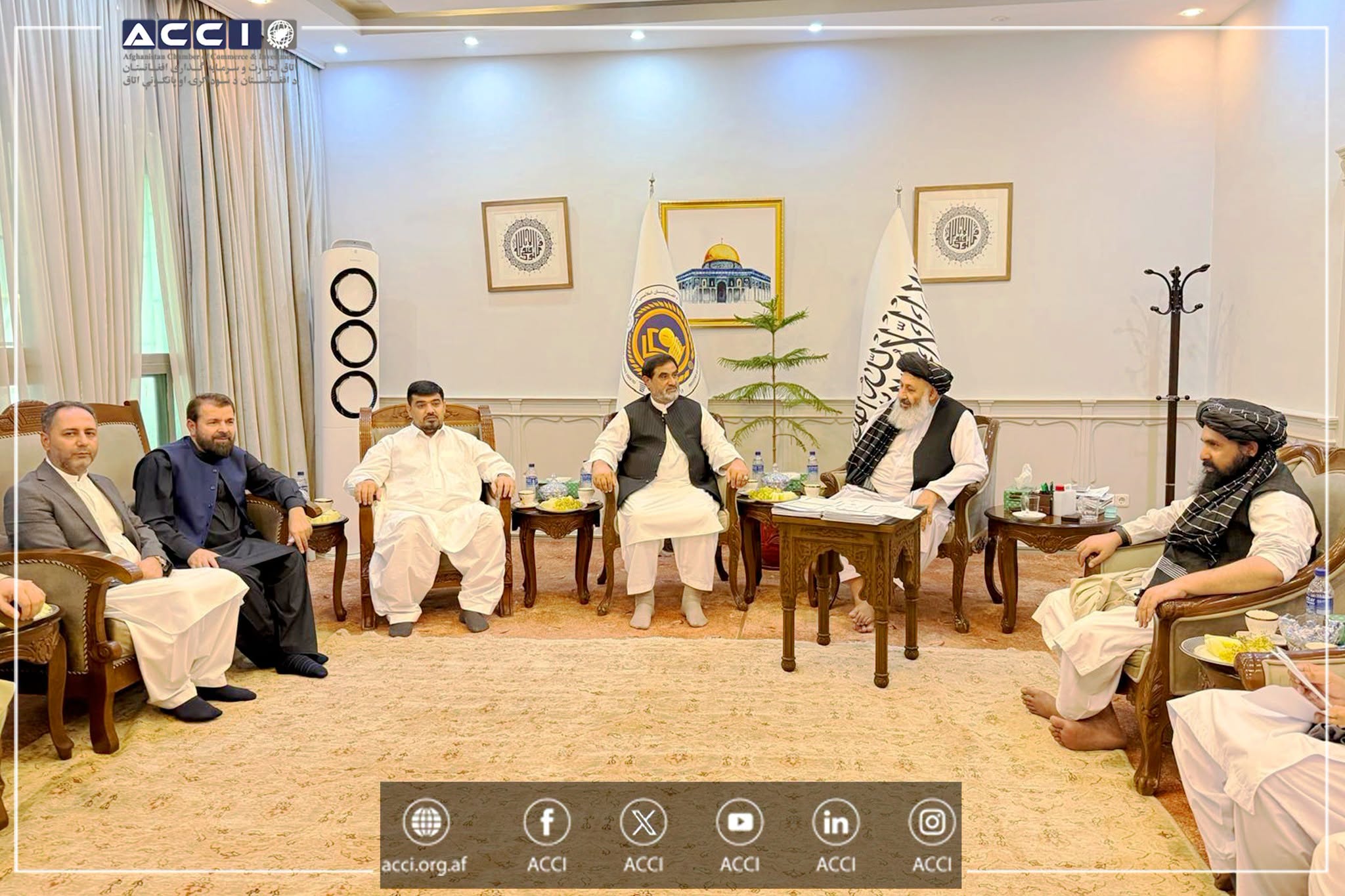
Mr. Sayed Karim Hashemi, Chairman of the Afghanistan Chamber of Commerce and Investment (ACCI), met with Mr. Mullah Mohammad Nasir Akhund, Minister of Finance of the Islamic Emirate of Afghanistan, at the Ministry of Finance.

The meeting focused on the challenges facing the country’s private sector, traders, and investors, particularly issues related to company audits, income tax, and creating greater facilities for trade and investment activities.

At the outset, Mr. Sayed Karim Hashemi expressed his appreciation for the continued cooperation, goodwill, and attention of the Ministry of Finance toward the private sector, traders, and investors. He noted that whenever the Afghanistan Chamber of Commerce and Investment has requested meetings to share the concerns and proposals of the private sector, the Ministry of Finance has welcomed such requests and consistently given serious attention to the challenges and demands of traders and investors.

Mr. Hashemi also expressed appreciation for the effective and constructive cooperation of the Minister of Finance in supporting the private sector, facilitating trade, and addressing the challenges of traders and investors. He emphasized that continued cooperation between the government and the private sector can play an important role in promoting trade, increasing investment, and advancing the country’s economic development.

A significant portion of the meeting focused on company audits conducted by the Audit Department of the Ministry of Finance and the mechanism for collecting income tax on companies’ annual revenues. In this regard, the Chairman of ACCI proposed establishing a mechanism to facilitate matters for traders, prevent administrative difficulties, and enhance transparency in tax payments. Under the proposed mechanism, when commercial goods enter customs from abroad, the relevant income tax would be calculated and settled at the same stage, after the customs duties have been cleared, in accordance with applicable principles and laws.

Mr. Sayed Karim Hashemi added that implementing such a mechanism could, on the one hand, save traders from lengthy procedures and repeated administrative visits and, on the other hand, reduce opportunities for tax evasion, ensuring that all traders and companies fulfill their tax obligations in an orderly, transparent, and fair manner.

Mr. Mullah Mohammad Nasir Akhund, Minister of Finance of the Islamic Emirate of Afghanistan, after hearing the views and proposals of the Chairman of ACCI, emphasized the government’s support for legitimate trade and investment activities in the country. He stated that the Ministry of Finance continuously seeks to provide the necessary facilities for the private sector within the framework of applicable principles and laws.

The proposal presented by the Chairman of ACCI regarding the settlement of income tax was also given attention by the Ministry of Finance. It was emphasized that its technical, financial, and implementation aspects should be reviewed by the relevant authorities and that an appropriate and practical mechanism should subsequently be developed.

During the meeting, both sides emphasized strengthening and continuing cooperation and coordination between the Ministry of Finance and ACCI, addressing the challenges of traders and investors, simplifying administrative and tax procedures, enhancing transparency, and creating a suitable environment for the growth of trade and investment in the country.

The meeting was also attended by Mr. Mirajan Solaimankhail, Deputy for Government Relations at ACCI; Mr. Enayatullah Sediqzai, Deputy of ACCI; and Mr. Haji Atiqullah , Member of the ACCI Board of Directors and one of the country’s prominent national traders.

The meeting concluded in a spirit of mutual understanding, cooperation, and goodwill, with both sides emphasizing the continuation of such meetings to address private sector challenges, improve the trade and investment environment, and strengthen cooperation between the government and the country’s business community.

More Articles ...